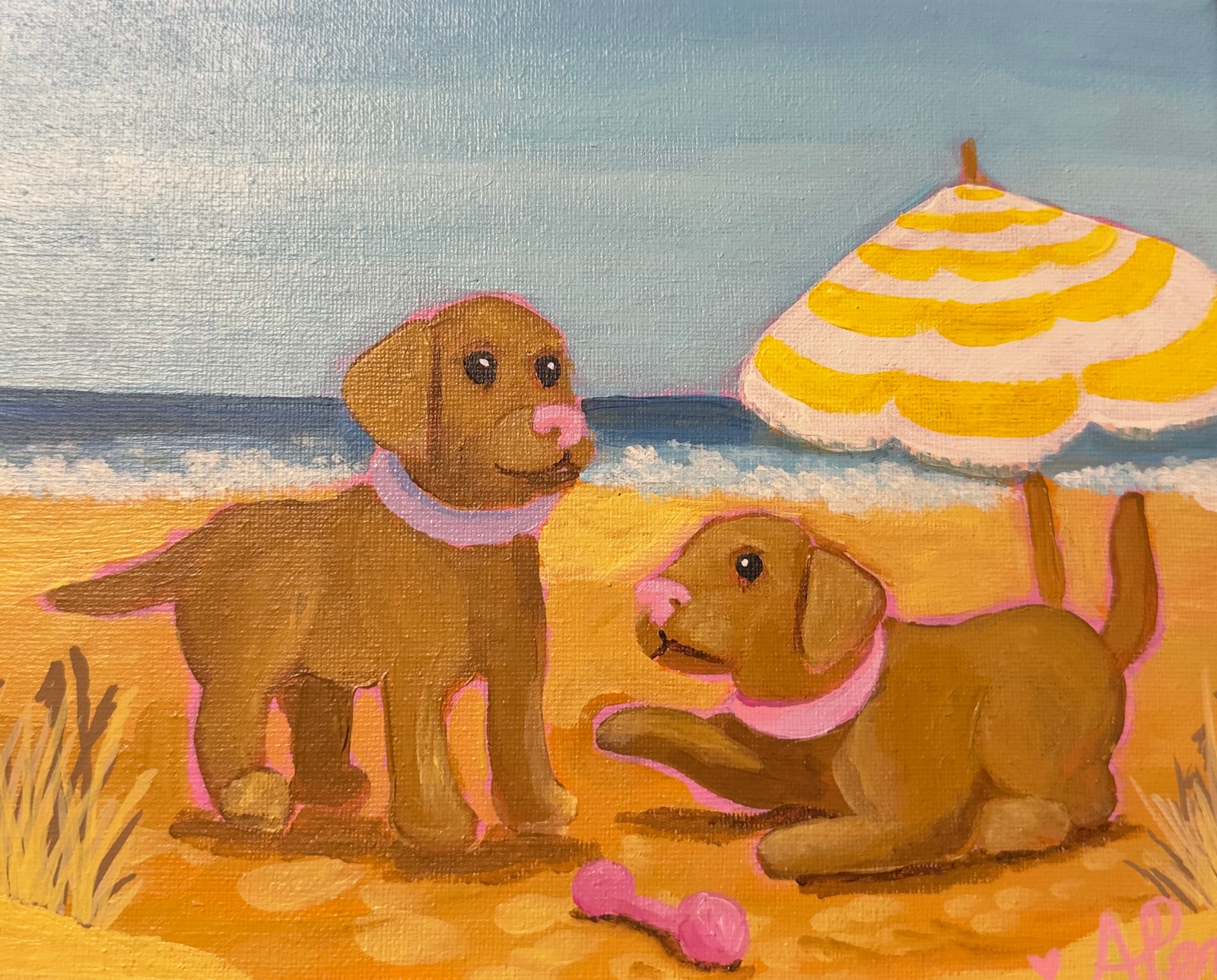
Merry Christmas
From Christmas Short Stories
SPECIAL EVENTS
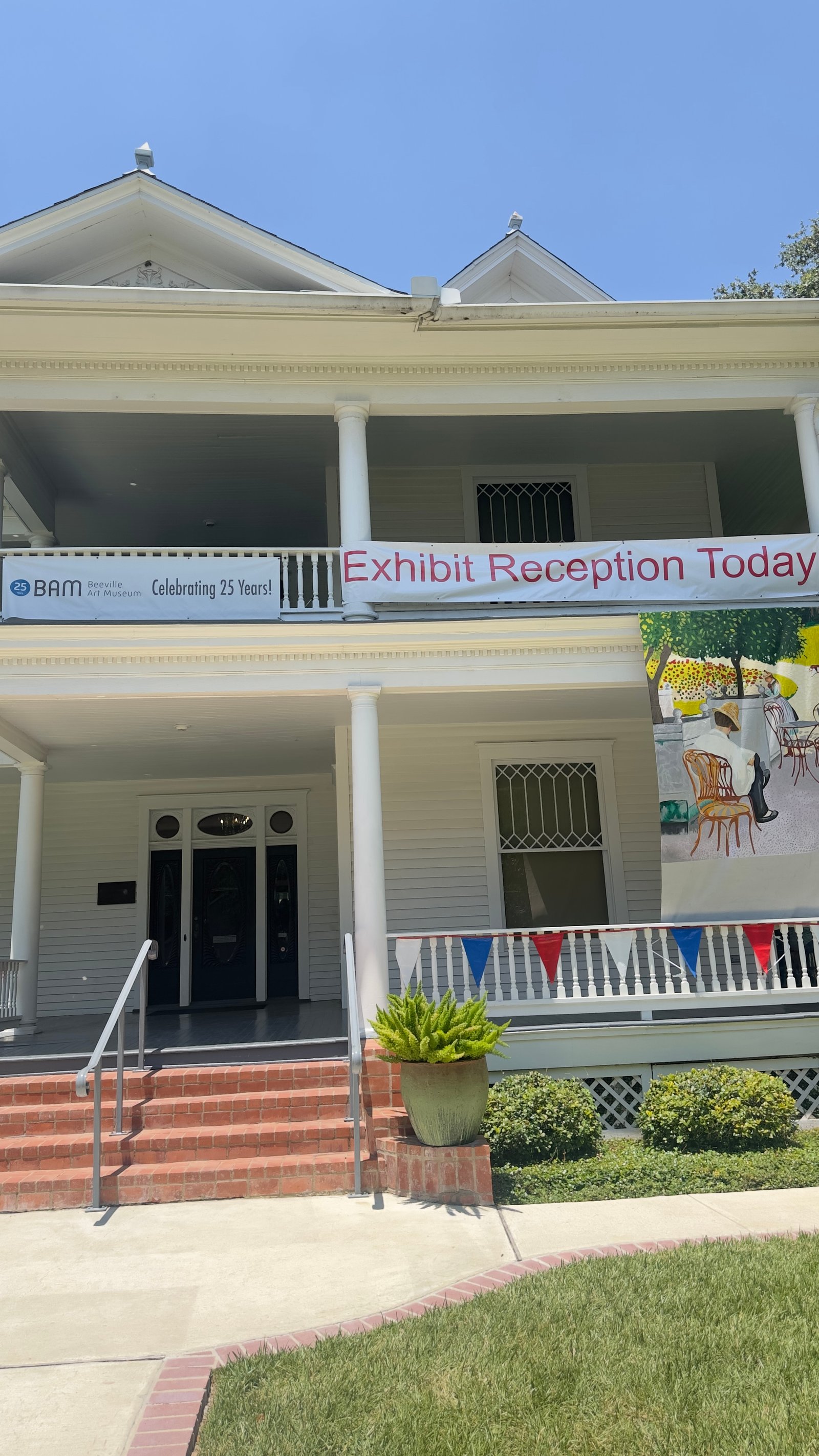
Beeville Art Museum — A Hidden Gem
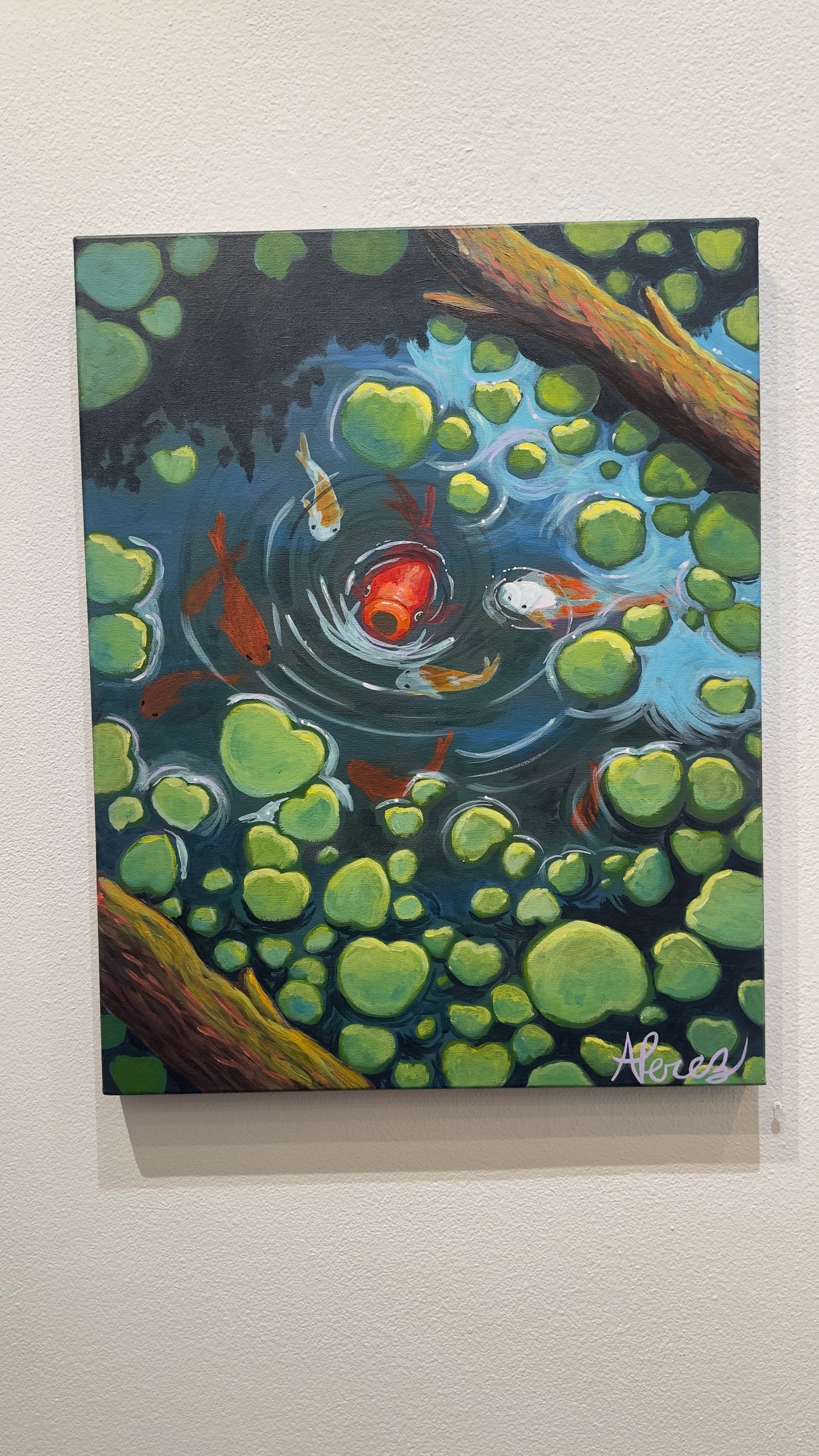
Over the weekend, I accidentally stumbled upon an art opening in Beeville, Texas. I had no idea Beeville had an art museum and was almost hesitant to get out and enter, but when I saw the large crowd gathered, I decided to give it a chance. I'm so happy I did.
There were several different styles on display, everything from photography to watercolor.

DISCOVER THE
UNDERGROUND
COMMUNITY PULSE
Most Expressive Art Form?
Cast your vote to see the results.
BULLETIN BOARD
The Art of Christmas Cookies

Pile of assorted Christmas cookies. Photo by Lyn Lomasi, CC0 1.0 (Wikimedia Commons).
Christmas cookies are small enough to fit in a palm, yet they carry the weight of centuries. They record trade routes, religious calendars, household economies, migration, and the particular imagination of the person holding the rolling pin. A cookie can be a family recipe, a regional emblem, a gift, an ornament, or an edible miniature sculpture. Its brief life does not make it less artistic. Like many works of art, it depends on proportion, rhythm, colour, texture, and the hand that made it.
A short history of the Christmas cookie

‘Der Lebküchner’ (the gingerbread baker), copper engraving by Christoph Weigel, 1698. Deutsche Fotothek — public domain (Wikimedia Commons).
There is no single birthplace of the Christmas cookie. Its history is a meeting point of several older traditions: sweetened breads and wafers made in medieval Europe, the use of honey and dried fruit in festive baking, and the arrival of costly spices through long-distance trade. Sugar was once a luxury, and spices such as cinnamon, cloves, ginger, nutmeg, and cardamom were associated with wealth as well as flavour. When these ingredients appeared in winter baking, they gave ordinary flour and fat a ceremonial character.
German-speaking Europe played a particularly important role in shaping the modern Christmas-cookie tradition. Medieval monasteries had access to refined sugar and imported spices, and religious festivals created occasions for special baking. Over time, the broad German term Weihnachtsplätzchen came to describe the assortment of small Christmas treats prepared in homes and bakeries. Nuremberg became famous for Lebkuchen, its richly spiced gingerbread, while other regions developed almond biscuits, jam-filled cookies, anise biscuits, stamped cookies, and crescent-shaped pastries.
The custom travelled with people. German settlers carried festive baking traditions to North America, where they met local ingredients, new ovens, commercial baking powder, and eventually mass-produced cookie cutters. During the nineteenth century, shaped sugar cookies became increasingly popular in the United States. A dough could now be turned into a star, angel, tree, bell, snowflake, or person, then decorated with coloured sugar and icing. The cookie was no longer only something to eat. It was also a picture.
Germany: spice, pattern, and regional identity

Assorted German Christmas cookies (Weihnachtsgebäck). Photo by Tommy Rumrich, released into the public domain (Wikimedia Commons).
German Christmas baking is not one recipe but a varied landscape. Lebkuchen may be soft or firm, glazed or chocolate-coated, nut-rich or flour-based. Nuremberg’s Lebkuchen is especially associated with finely ground nuts and aromatic spices. Spekulatius, known in Germany and neighbouring countries, is a crisp spiced biscuit often pressed into carved moulds. Its surface may show a windmill, a saint, a rider, or another traditional figure. The mould turns the baker into a printmaker, transferring an image from carved wood into dough.
Vanillekipferl, crescent-shaped vanilla biscuits common across German-speaking and Central European kitchens, demonstrate another kind of design. Their elegance comes from repetition: dozens of similar crescents arranged on a tray, each one slightly different because it was shaped by hand. Zimtsterne, or cinnamon stars, make a simple visual claim with their pointed silhouettes and white glaze. They resemble cut-paper ornaments, but their geometry is softened by the scent of cinnamon and the tenderness of the meringue topping.
German Christmas cookies also reveal the value placed on surface. A stamped pattern, a thin glaze, a dusting of sugar, or a precise coating of chocolate can transform a plain biscuit. The decoration is not merely an addition. It is part of the cookie’s identity, just as a frame, glaze, or finish can alter the way a painting is read.
Mexico: Christmas baking with local memory
Mexican Christmas sweets emerge from a different history, although they share familiar themes with European festive baking. Indigenous ingredients, Spanish colonial traditions, regional cuisines, and later global exchanges all contribute to the country’s rich holiday table. Cinnamon is especially important, and it appears in many Mexican sweets alongside sugar, nuts, fruit, chocolate, and sometimes citrus.
One well-known holiday treat is the Mexican wedding cookie, often called polvorón or polvorosa in different regions and communities. Despite its English name, it is frequently associated with Christmas as well as weddings and other celebrations. The name suggests something powdery or crumbly, and the finished cookie is often rolled in confectioners’ sugar. Its visual effect is wintery and theatrical: a golden biscuit disappears beneath a white coating, like a small landscape after snowfall.
Other Mexican Christmas traditions centre on cookies and sweets flavoured with cinnamon, anise, vanilla, piloncillo, nuts, or chocolate. Regional recipes vary widely, so it is better to speak of Mexican Christmas baking in the plural. A cookie made for a family posada may carry a different texture and history from one prepared in a northern bakery or a central Mexican home. Some treats are crisp, some melt in the mouth, and some belong to the wider world of sweet breads and pastries rather than to the narrow category of cookies.
The comparison with German cookies is revealing. German traditions often foreground carved patterns, spice blends, and recognisable regional forms. Mexican holiday sweets frequently foreground aroma, crumb, sugar, and the memory of shared celebration. Both traditions use the cookie as a vessel for identity, but they do not express that identity in the same visual language. One may resemble a carved ornament; another may resemble a handful of snow, a folded paper confection, or a golden fragment from a family’s kitchen history.
Around the world
Christmas cookies change as they cross borders. In Scandinavia, crisp ginger biscuits, saffron buns, and cardamom-scented pastries bring a cool, bright fragrance to the season. In Italy, regional baking includes nut cookies, citrus biscuits, and almond-based sweets. In Austria, delicate vanilla crescents and jam-filled cookies are central to many holiday assortments. In Britain, shortbread, fruit-rich biscuits, and gingerbread occupy the festive table. In Central and Eastern Europe, poppy seed, honey, walnut, and spice appear again and again, shaped by local agriculture and older imperial connections.
In France, festive biscuits may be associated with regional sablés and spiced pain d’épices. In the Netherlands and Belgium, speculoos and related biscuits turn carved or pressed designs into edible decoration. In the United States and Canada, the Christmas cookie plate often combines many inheritances: German-style cutouts, Italian almond cookies, Scandinavian butter biscuits, gingerbread, fudge-like cookies, and recipes invented in individual households.
The result is less a single tradition than a conversation among traditions. Ingredients travel, names change, and recipes are adapted to new kitchens. A cookie may keep its shape while changing its spice mixture, or keep its name while acquiring a different texture. That flexibility is part of its art.
Cookies as miniature works of art
To call a decorated cookie a work of art is not to pretend it will last forever. Ephemeral art has always depended on the tension between beauty and disappearance. A sand drawing, a flower arrangement, or a performance exists for a limited time. So does a Christmas cookie. Its maker knows that the work will eventually be broken, tasted, and gone. The value lies partly in that planned impermanence.
Baking also resembles sculpture. The dough must be rolled to an even thickness, cut into a deliberate silhouette, and shaped so that it survives the heat of the oven. Gingerbread houses extend this idea into architecture. Walls must be straight, joints must hold, and the roof must carry its own weight. Royal icing functions as mortar, glue, ornament, and line drawing all at once.
Decoration brings in the vocabulary of painting and graphic design. Icing creates outlines and fields of colour. Sprinkles add texture. Edible pearls provide repeated points of light. A skilled decorator controls negative space, symmetry, contrast, and scale. Even a simple snowflake cookie asks the maker to balance its arms and keep the pattern legible. The best designs do not merely contain more decoration. They know when to stop.
The edible nature of the medium changes the relationship between maker and audience. A painting is usually viewed from a distance, while a cookie is picked up, smelled, tasted, and shared. Its texture is part of its meaning. A crisp edge, a soft centre, a sandy crumb, or a melting sugar glaze can complete the design in ways the eye cannot see.
When baking becomes competition

First Lady Pat Nixon with the first White House gingerbread house, 1972. White House Photo Office — public domain, U.S. government work (Wikimedia Commons).
Christmas-cookie contests turn private skill into public display. Some are informal family competitions, judged by bragging rights and an empty platter. Others use formal categories and criteria such as composition, originality, technical difficulty, structural stability, and holiday theme.
In the United States, the National Gingerbread House Competition at Asheville’s Omni Grove Park Inn has become one of the best-known examples. It is primarily a gingerbread-house competition, but it shows how far the medium can be pushed. Competitors build elaborate edible structures, and judges consider design, craftsmanship, creativity, and execution. The work may include towers, bridges, windows, figures, and landscapes, all made from ingredients that began as flour, sugar, spice, and egg.
Peddler’s Village in Pennsylvania also hosts a public gingerbread competition with categories for different levels of experience. Its judging criteria include overall appearance, holiday spirit, originality, difficulty, and how well a creation fits its category. These standards sound familiar to anyone who has studied visual art. A successful entry must have an idea, but the idea must also be physically realised.
Cookie contests are often more democratic than gallery exhibitions. A professional decorator may compete beside a child, a family may vote online, and a local shop may invite customers to choose the most imaginative entry. The materials are accessible, the scale is intimate, and the audience understands the final act: somebody gets to eat the exhibit.
Europe offers a more diffuse contest culture, often connected with Christmas markets, pastry schools, regional fairs, bakery showcases, and gingerbread-house displays rather than one single continent-wide event. In Germany and neighbouring countries, the prestige of traditional Lebkuchen, stamped biscuits, and pastry craft often rests in the bakery itself, where recipes and techniques are refined over generations. In this setting, the competition may be implicit: which bakery has the finest spice balance, the most delicate decoration, or the most recognisable regional style?
The meaning of the finished plate
A Christmas cookie is both individual and collective. One person mixes the dough, another cuts the shapes, a child adds too much icing, and someone else quietly eats the broken pieces. The finished plate records all of those hands. Its irregularities are evidence of participation rather than failure.
That may be why Christmas cookies endure. They are inexpensive enough to make at home, adaptable enough to absorb local traditions, and expressive enough to become miniature artworks. German spice cookies, Mexican sugar-dusted polvorones, American cutouts, Scandinavian biscuits, and the countless regional variations in between all make the same quiet argument: food can carry history without becoming a museum piece.
The cookie is made to be shared, and sharing changes the art. A perfect design becomes a gift. A family recipe becomes a link between generations. A contest entry becomes a public performance. A crumb on a plate becomes the trace of an object that succeeded in its purpose.
Featured Episode
The Knock at the Door
Tune in to “The Knock at the Door” on Spreaker.
THE UNDERGROUND BROADCAST
Tune in to our vintage frequency. Featuring curated videos, tutorials, and custom visual transmissions straight from the source.
UNDERGROUND
Featured Clip
YouTube Signal
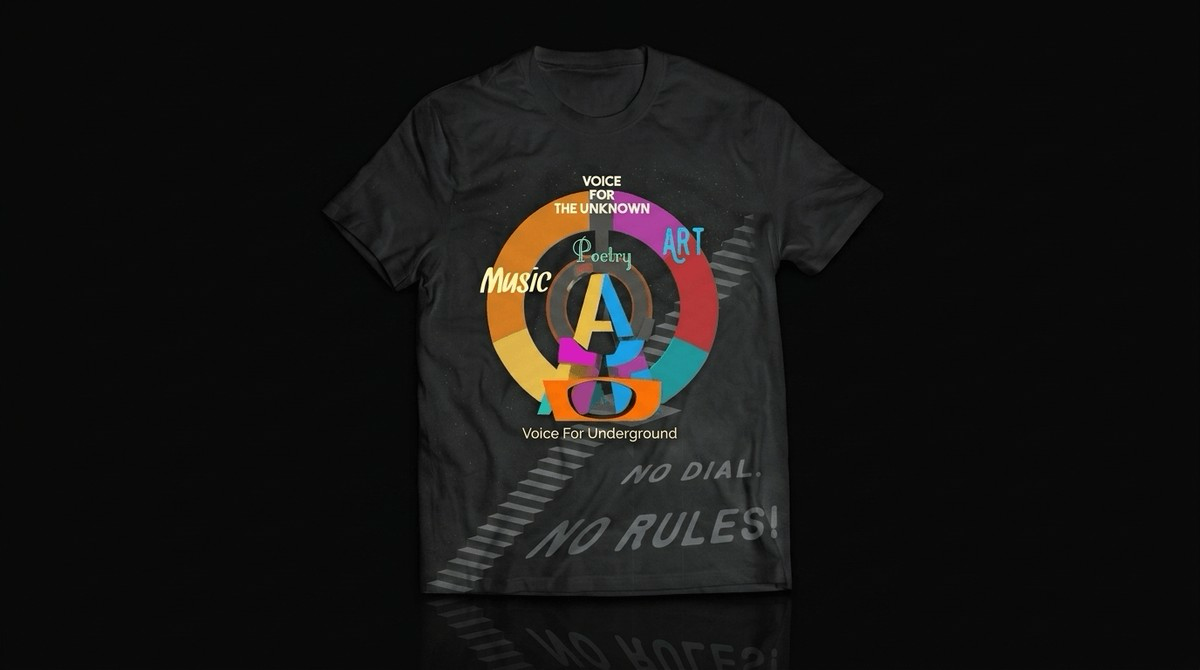
WEAR THE UNDERGROUND
Official Merchandise - Support independent creators and represent the network. Explore our exclusive collection of apparel, accessories, and art prints available now on our official Redbubble store.